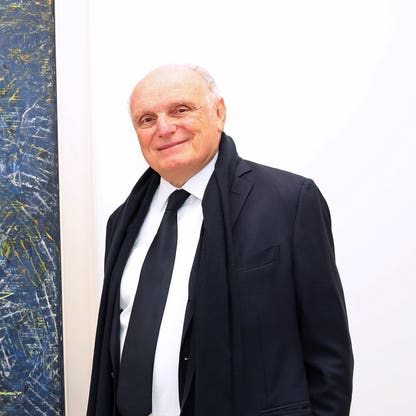
Inside Ezra Nahmad's $3.5 Billion Art Trove: 300 Picassos and More
The world of fine art is often perceived as an exclusive, enigmatic realm, a perception reinforced by figures like Ezra Nahmad. A name whispered with reverence and awe within elite art circles, Ezra Nahmad is more than just a collector; he is a titan, a strategic force, and a custodian of some of the most significant works of modern and Impressionist art. With his brother David, he commands an art empire whose collective inventory is estimated at a staggering $3.5 billion, a treasure trove that includes an astonishing 300 Picassos alone, valued at over $1 billion. This article delves into the enigmatic world of Ezra Nahmad, exploring the immense scale of his collection, his astute business strategies, and the factors that contribute to the colossal
Ezra Nahmad Net Worth.
The Nahmad Dynasty: A Legacy Forged in Fine Art
Hailing from a prominent Jewish Lebanese family with deep roots in the art world, Ezra Nahmad was born into a legacy of connoisseurship and trade. Residing in the glamorous principality of Monaco, the Nahmad family has cultivated an unparalleled influence over the global art market for decades. At the heart of this formidable enterprise is the partnership between Ezra and his equally formidable brother, David. Together, they are widely recognized as the single biggest buying force in fine art, a duo whose presence at major auctions can sway market dynamics and set new benchmarks.
Their influence extends beyond just the two brothers. The Nahmad legacy is a multi-generational phenomenon, with Ezra's sons, Hillel and Joe, running successful art galleries in London. Across the Atlantic, their American cousins, also named Hillel and Joe, manage prominent galleries in New York. This familial network underscores the enduring power and strategic reach of the Nahmad name, allowing them to operate on multiple continents and maintain a consistent presence in the ever-evolving art landscape. This deeply ingrained family tradition of dealing, collecting, and investing in art has been instrumental in building and sustaining the immense
Ezra Nahmad Net Worth.
Unveiling the $3.5 Billion Treasure Trove: More Than Just Picassos
The sheer scale of the Nahmad collection is difficult to grasp. Estimates suggest their inventory comprises between 4,000 and 4,500 works, an extraordinary number that positions them as private holders of one of the world's most extensive collections of modern masters. This isn't just about volume; it's about unparalleled quality. The collection reads like a definitive list of art history's most celebrated names, featuring masterpieces by Monet, Matisse, Renoir, and Rothko, alongside works from over 30 other "blue-chip" artists.
Among these countless treasures, one segment stands out: the Picasso collection. The Nahmads possess an astounding 300 works by Pablo Picasso, a testament to their foresight and commitment to the Spanish master. This segment alone is valued at no less than $1 billion, representing a significant portion of the total inventory and highlighting Picasso's enduring market dominance.
But what exactly constitutes a "blue-chip" artist, and why do the Nahmads focus so heavily on them? In the art market, "blue-chip" refers to artists whose works have a proven track record of consistent value appreciation, strong demand, and high liquidity. These are the artists whose names resonate universally, whose legacies are cemented, and whose works are considered safe, yet lucrative, investments. The Nahmads' strategy is a masterclass in this approach:
- Focus on Proven Masters: They primarily acquire works by artists whose reputations are firmly established and whose market value has consistently risen over decades.
- Volume and Depth: Owning multiple works by the same artist allows them to influence market perception and potentially control supply. Their 300 Picassos, for instance, give them immense leverage.
- Strategic Patience: While they buy and sell regularly at auction, they are also known for holding works for extended periods, allowing them to appreciate in value significantly.
This calculated approach to acquiring and managing a vast portfolio of top-tier art is a core pillar supporting the impressive
Ezra Nahmad Net Worth.
Strategic Sanctuary: The Duty-Free Warehouse in Geneva
Where do you store a collection worth billions, comprising thousands of invaluable masterpieces? For the Nahmads, the answer lies in the discreet, high-security confines of a duty-free "freeport" warehouse located next to the airport in Geneva, Switzerland. This choice is far from arbitrary; it's a shrewd strategic decision that offers multiple advantages for managing such a vast and valuable inventory.
Freeports are specialized storage facilities, often situated in international zones, that allow goods to be stored and traded without incurring import duties, taxes, or even sales tax, as long as they do not officially enter the host country's customs territory. For art dealers and collectors of the Nahmads' stature, these benefits are immense:
- Tax Efficiency: By keeping artworks in a freeport, the Nahmads can defer or completely avoid significant taxes that would otherwise apply if the art were imported into another country. This drastically reduces the holding cost of their inventory.
- Security: Geneva's freeport, like others of its kind, boasts state-of-the-art security systems, climate control, and expert handling, ensuring the pristine condition and safety of the artworks.
- Discretion: Transactions and ownership details within freeports can often remain private, appealing to clients who value anonymity in their high-value dealings.
- Logistical Hub: Its proximity to an international airport makes it incredibly convenient for transporting artworks globally or arranging private viewings for potential buyers, facilitating swift trades.
This strategic use of a freeport underscores the Nahmads' sophisticated understanding not just of art, but of global finance and logistics. It allows them unparalleled flexibility and efficiency in buying, holding, and selling, directly impacting the profitability that contributes to the
Ezra Nahmad Net Worth. For aspiring art investors, understanding these logistical and financial considerations is as crucial as appreciating the art itself.
Ezra Nahmad Net Worth: Decoding the Billionaire's Fortune
When discussing the
Ezra Nahmad Net Worth, it's important to differentiate between the value of the joint art inventory and Ezra's personal wealth. The collective Nahmad inventory with his brother David is consistently valued in the range of $3 billion to $3.5 billion. Given their reported 50/50 split of this vast joint inventory, Ezra's share alone would account for a significant portion of his personal fortune.
Various sources provide slightly differing figures for Ezra Nahmad's individual net worth. Earlier reports estimated it around $1.5 billion, while more recent figures, such as those from April 2023, place his net worth at approximately US$1.8 billion. This fluctuation can be attributed to several factors:
- Market Valuations: The value of art can appreciate or depreciate based on market trends, artist popularity, and economic conditions.
- Private Transactions: Much of the Nahmads' dealings happen outside public view, making precise valuation difficult for external observers.
- Personal vs. Business Assets: Net worth calculations often include personal assets beyond the shared business inventory.
Regardless of the precise figure, what remains clear is that Ezra Nahmad is an immensely wealthy individual, propelled by his strategic dominance in the fine art market. He is often recognized as one of Monaco's wealthiest residents, a testament to the colossal value he and his brother have amassed through their shrewd art dealings. His wealth is a direct reflection of the unparalleled value and strategic management of their extraordinary collection.
The Art of Discretion: Ezra Nahmad's Low Profile Strategy
In an era where personal brands and public personas are often meticulously crafted, Ezra Nahmad stands out for his deliberate commitment to a low profile. While his brother David is known to be more voluble and occasionally speaks to the press, Ezra himself maintains a strict policy of silence, rarely engaging with media outlets.
This penchant for discretion is not merely a personality trait; it's a calculated business strategy that serves him well in the high-stakes world of art dealing.
- Negotiating Advantage: A low profile can be advantageous in negotiations, allowing him to operate outside the glare of public scrutiny and maintain an aura of mystery.
- Security and Privacy: For individuals handling assets worth billions, privacy is paramount for personal safety and business security.
- Focus on the Art: By avoiding personal publicity, the focus remains squarely on the art and the transactions, rather than on the dealer's personality.
This strategic quietness contrasts sharply with the public image of many contemporary billionaires and celebrities. It allows Ezra Nahmad to be a silent, yet immensely powerful, orchestrator behind the scenes, further cementing his reputation as a master strategist in the art market. To delve deeper into this aspect of his life, read more about
Ezra Nahmad: Monaco's Billionaire Art Dealer, Inside His Low Profile.
Conclusion
Ezra Nahmad, alongside his brother David, has forged an art empire that is unparalleled in its scale, value, and strategic acumen. From their family roots in Lebanon to their dominance in Monaco and the global art market, the Nahmads embody a rare blend of inherited passion, business brilliance, and a profound understanding of art's intrinsic and market value. Their $3.5 billion art trove, with its 300 Picassos and thousands of other masterpieces, is not just a collection; it's a testament to a meticulously crafted strategy of acquiring blue-chip art, storing it in tax-efficient freeports, and trading it with unmatched expertise. The remarkable
Ezra Nahmad Net Worth is a direct reflection of this legacy and their continuing influence on the global art market, where discretion, knowledge, and strategic foresight remain the ultimate masterpieces.