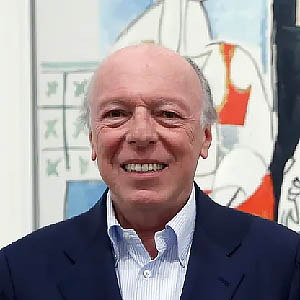
Ezra Nahmad: Monaco's Billionaire Art Dealer, Inside His Low Profile
In the exclusive realm of high art, where masterpieces exchange hands for astronomical sums and collectors often vie for public recognition, one figure stands out for his immense wealth and profound discretion: Ezra Nahmad. A name synonymous with an unparalleled art collection and a masterful approach to the market, Nahmad has quietly amassed a fortune, making him one of Monaco's richest residents. Despite his monumental influence on global art prices and his status as a billionaire, Ezra Nahmad remains largely an enigma, a testament to his deliberate strategy of maintaining a remarkably low profile. For those curious about the financial powerhouses of the art world, understanding
Ezra Nahmad's net worth and his distinctive modus operandi offers a fascinating glimpse into the rarefied air of international art dealing.
As of recent estimates in April 2023, Ezra Nahmad's personal net worth is approximated at an astonishing US$1.8 billion. This makes him one of the wealthiest individuals in Monaco, a principality renowned for its affluent residents. This staggering figure is not merely a reflection of personal investments, but predominantly derives from his 50% share in an extraordinary joint art inventory with his equally formidable brother, David Nahmad. This shared treasure trove is valued at an estimated $3.5 billion, making the Nahmad brothers arguably the single largest private buying force in the fine art market today.
The Nahmad Dynasty: A Legacy Forged in Art
Ezra Nahmad was born in 1945 into a Jewish Lebanese art family, a heritage that laid the foundation for his future empire. Residing in the glamorous principality of Monaco, the Nahmad family has a long-standing tradition intertwined with the appreciation and trade of art. This deep-rooted connection to the art world wasn't merely a hobby but a sophisticated business passed down through generations. Ezra, alongside his brother David, elevated this family legacy to unprecedented heights, transforming it into a global art powerhouse.
More than just brothers, Ezra and David Nahmad operate as a symbiotic force in the art market. Their partnership is characterized by an almost unmatched acumen for identifying, acquiring, and strategically trading masterworks. Their collective vision and financial might allow them to move the market in ways few others can. While David is known to be more outspoken and visible in public art circles, Ezra's strength lies in his quiet strategizing and an unwavering commitment to anonymity, forming a powerful contrast that defines their shared success. Their combined inventory, rather than being a mere collection, functions as a highly liquid asset, constantly evaluated and strategically managed to maximize value and influence.
The Unseen Treasury: Inside the Nahmad Collection
The sheer scale and value of the Nahmad art collection are difficult to fathom. It's not displayed in grand public galleries but carefully curated and stored in a highly secure, duty-free warehouse adjacent to the airport in Geneva, Switzerland. This isn't just any storage unit; it's a high-security, duty-free zone, a testament to the immense value contained within. This strategic choice of storage location offers significant financial advantages, allowing for the deferral of import duties and taxes until the works are officially brought into a country for sale or display.
The collection, estimated to comprise between 4,000 to 4,500 works, is a veritable who's who of modern and impressionist art. It features masterpieces by more than 30 blue-chip artists, including some of the most iconic names in art history:
- Claude Monet
- Henri Matisse
- Pierre-Auguste Renoir
- Mark Rothko
- Wassily Kandinsky
- Joan Miró
- Chaim Soutine
However, the crown jewel of the Nahmad holdings is undoubtedly their staggering collection of works by Pablo Picasso. Among their unparalleled holdings are an astonishing 300 works by the Spanish master, now estimated to be worth at least $1 billion. This vast Picasso collection alone represents a significant portion of their overall wealth and underscores their dominance in a highly competitive segment of the art market. To truly appreciate the breadth and value, one must delve
Inside Ezra Nahmad's $3.5 Billion Art Trove: 300 Picassos and More.
The Nahmad siblings generally acquire and divest their works through the world's premier auction houses. This approach allows them to operate with a degree of market transparency while also leveraging their financial power to influence prices and secure highly sought-after pieces. Their presence at an auction can send ripples through the art market, often signaling confidence in a particular artist or segment.
A Master of Discretion: Ezra Nahmad's Low Profile Strategy
While many billionaires revel in public displays of wealth and actively cultivate a media presence, Ezra Nahmad has cultivated an almost enigmatic persona. He is famously low-profile, choosing never to speak to the press. This stands in stark contrast to his brother David, who is known for his more voluble and public interactions with the media and art world figures. Ezra's chosen path of discretion is not merely a personal preference but a calculated strategy that likely offers several advantages in the high-stakes art market:
1.
Negotiating Leverage: Operating away from the public eye can provide a distinct advantage in art acquisitions and sales. Anonymity can prevent inflated prices from sellers aware of a buyer's deep pockets and allows for more private, direct negotiations.
2.
Security and Privacy: Given the immense value of their collection, a low profile minimizes potential security risks and allows for a greater degree of personal privacy for Ezra and his family.
3.
Focus on the Art, Not the Persona: By avoiding the limelight, Ezra can presumably focus solely on the intricacies of the art market, the quality of the works, and strategic financial decisions without the distractions of public scrutiny or celebrity.
4.
Market Influence without Direct Intervention: The Nahmads' power is felt through their transactions, not their pronouncements. Their movements at auctions speak volumes, shaping market trends without the need for public commentary.
Ezra's ability to remain largely out of the spotlight while wielding such immense influence is a testament to his discipline and the effectiveness of his approach. It underscores a philosophy where the art, and the business of art, takes precedence over personal fame.
Influence Beyond the Spotlight: The Nahmad's Impact on the Art Market
The Nahmad brothers' impact on the global art market cannot be overstated. Their strategic acquisitions and sales at major auction houses like Christie's and Sotheby's often set benchmarks and influence market trends for modern and impressionist works. They are not merely collectors but active participants, shaping valuations and perceptions of artists. Their primary modus operandi involves strategic acquisitions and divestments at the world's premier auction houses, making them kingmakers in their chosen segments.
The Nahmad legacy is also expanding into the next generation. Ezra's sons, Hillel and Joe Nahmad, have established their own prominent art galleries in London, furthering the family's reach and influence. Similarly, their American cousins, also named Hillel and Joe, run successful galleries in New York, creating a widespread network that spans the major art capitals of the world. This generational continuity ensures that the Nahmad name will remain a dominant force in the art market for decades to come, demonstrating a shrewd understanding of long-term wealth preservation and growth within the art sphere.
Beyond their direct transactions, the Nahmads serve as an example of how a private entity can exert immense, almost unseen, control over a significant portion of the art market's most coveted assets. Their ability to hold a vast inventory of blue-chip art for extended periods allows them to ride out market fluctuations and strategically release works when conditions are most favorable, essentially acting as a central bank for modern masterpieces.
Conclusion
Ezra Nahmad, the Monaco-based billionaire art dealer, is a fascinating study in power, wealth, and discretion. His estimated $1.8 billion net worth is a testament to his and his brother David's unparalleled expertise in navigating the complex world of fine art. From their formidable joint collection housed in a Geneva freeport, boasting 300 Picassos worth over a billion dollars, to their strategic operations at global auctions, the Nahmads are undisputed titans. Yet, it is Ezra's steadfast commitment to a low profile – a deliberate choice to remain out of the media's glare – that truly sets him apart. He operates as a silent force, his influence felt through market movements rather than public pronouncements. As the next generation extends the Nahmad dynasty into new galleries in London and New York, Ezra Nahmad's legacy as a master of both art and anonymity will undoubtedly endure, cementing his place as one of the most intriguing and powerful figures in the history of the art market.